Back to Water Damage Restoration

Services

Emergency water extraction

Standing and absorbed water out first, because drying a saturated floor is drying nothing.

5.0 from 168 Google reviews 24 hours, by appointment

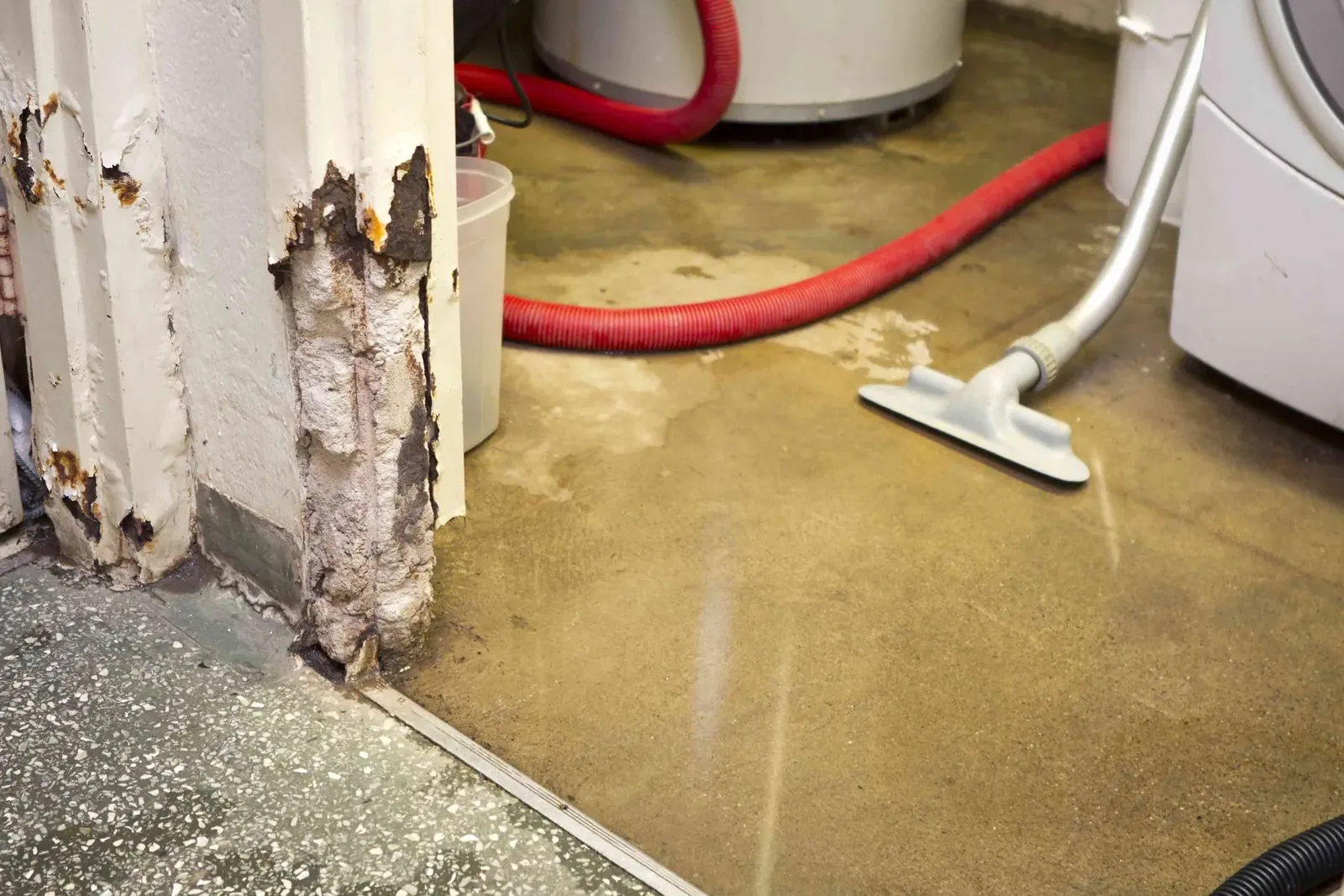
A rotted door frame and swollen baseboard beside a water heater, with an extraction wand and a red hose lying on a wet concrete floor.

reference photograph, not one of our jobs

Photo pending

Sheet 01B, Water Damage Restoration

Scope

What this covers

Extraction is the first physical work on any water loss and it is the work that saves the most material. A machine that lifts liquid water out of a carpet and its pad removes in minutes what a dehumidifier would need days to pull through the air. Every hour of extraction delay is an hour that water spends moving into material that was dry when the loss started.

  • Standing water removed from floors, stairs and below grade rooms
  • Absorbed water pulled from carpet and pad with a weighted or self propelled extraction tool
  • Water lifted off and out of hard flooring, grout lines and floor seams
  • Trapped water released from wall cavities and under cabinet toe kicks where it is present
  • Moisture mapped before and after extraction so the result is measured rather than assumed
  • Unsalvageable saturated material identified and removed by category

Detail

Where the water is

Standing water is the smallest part of most losses. The rest is held in material, and each material gives it up differently.

Extraction works through the assembly from the top down, and each layer takes a different tool. Water that has reached the subfloor or the sill plate is the water that decides how long a job runs, which is why the meter goes past the visible wet edge before the first pass and again after the last one.

Emergency Water Extraction Drawn from the standard. This is a drawing and no reading on it is live. Tide line

Drawn from the standard. This is a drawing and no reading on it is live. Extraction removes liquid water mechanically, which is faster than any amount of evaporation.

On the surface
Standing water on the floor, on stairs and in low points, removed first and fastest.
In the floor covering
Water held in carpet fiber and backing, lifted with a weighted extraction tool.
Water held in the pad, which needs compression to release it or removal to be rid of it.
In the structure
Water in the subfloor, in seams and under the edges of hard flooring.
Water in wall cavities, insulation and sill plates, reached by opening the assembly.

Common questions

What people want to know before booking

Why extract before drying?

Because evaporation is the slow way to move water. A carpet and pad holding liquid water release it into the room as vapor, and every pint of that vapor has to be pulled back out by a dehumidifier. Extracting the liquid first cuts the drying time and the equipment count, and it is the rule the whole trade runs on.

Does extraction save the carpet?

It gives the carpet its best chance, and the category still decides. Clean water extracted quickly usually means the carpet and often the pad are dried in place. Gray water usually means the pad comes out even after extraction. Category 3 water means the carpet comes out regardless of how well it was extracted.

How much water can be removed?

Enough that the difference is visible on a meter within the hour. Extraction is measured, not eyeballed: readings are taken across the affected area before and after, and passes continue until the readings stop improving. What remains after that is the bound water that drying equipment is for.

Can I extract it myself with a wet vacuum?

For a small clean water spill, yes, and doing it in the first hour is worth doing. A household wet vacuum lifts surface water but does not compress a pad or reach a cavity, so it thins the problem rather than solving it. Photograph the room first either way.

The method

Extract before you evaporate

The order is arithmetic. A gallon of liquid water sitting in a carpet pad can be pulled out with a machine in a few passes. The same gallon left in place has to evaporate into the room air and then be condensed back out by a dehumidifier, which takes hours of machine runtime and puts every one of those hours of vapor in contact with the walls, the ceiling and the contents.

That is why a room full of air movers over a saturated carpet is a mistake rather than a fast start. Air movement across standing water raises the room humidity faster than the dehumidification can lower it, and the excess vapor goes into the drywall, the trim and the framing, which then need drying too. The room looks busy and the job gets longer.

Extraction is finished when the readings stop improving with another pass. At that point what remains is bound water inside the material, and bound water is what drying equipment exists to remove.

Carpet, pad and hard floors take different tools

Carpet releases water under weight. A weighted extraction tool presses the carpet and pad together against the subfloor and pulls the water up through the face, and a self propelled version does the same thing with more consistent pressure over a large area. The number of passes is decided by the meter rather than by the look of the carpet.

Pad is the hard part. Open cell foam pad holds several times its weight in water and gives it up slowly under compression. In a clean water loss caught quickly, pad is often extracted and dried in place with air forced under the carpet. In a gray water loss the pad comes out, because what is in the water is held in the foam and drying it leaves the contamination behind.

Hard floors hold their water at the seams and underneath. Water on a tile floor is removed from the surface and then pulled from the grout lines, and water that has gone under a plank or a sheet floor is reached from the edges or by removing a section, because water trapped under a vinyl sheet floor will not evaporate through it at any useful rate.

Cavities, toe kicks and the places water hides

Water travels sideways and upwards through materials by capillary action, so the wet area on the meter is always larger than the wet area to the eye. It runs under the edge of a base cabinet into the toe kick space, where there is no air movement and no light, and it wicks up the paper face of drywall well above the water line.

Where a cavity is holding water, the assembly is opened rather than dried through. That may be a row of small holes behind the base trim to move air into a wall cavity, a removed section of base trim, or a cut line above the wet zone in the drywall. Every opening is photographed before it is made and recorded with the reading that justified it.

The alternative to opening an assembly is drying its outside face while the inside stays wet, which produces a surface that reads dry, a wall that fails a reading two weeks later and, often enough, a mold call three months later.

When extraction is not the answer

Some material is removed instead of extracted. Saturated insulation holds water and loses its function, and it is taken out rather than dried. Particle board and medium density fiberboard swell and lose structural integrity once wet, and neither recovers. Carpet pad in a category 2 or category 3 loss comes out.

In a category 3 loss the whole approach changes. Porous materials exposed to black water are removed and discarded, and the extraction that does happen is about getting the water out of the building safely rather than about saving the material it came out of.

Everything removed is photographed in place first, measured, and logged with the category that required it. That record is what makes a removal decision legible to an adjuster who was not in the room.

Before you call

Frequently asked questions

Question 1: How long does extraction take?

A single room is usually extracted within the first visit. A whole floor of a house, or a below grade level with several inches standing, runs longer and sometimes across two visits. The end point is a reading rather than a clock: passes continue until another pass stops changing the numbers.

Question 2: Will extraction alone dry my floor?

No. Extraction removes the liquid water, which is most of the volume, and drying equipment removes the bound water still inside the material. A floor that has been extracted but not dried reads wet on a meter and grows mold on the schedule the EPA describes, which is why the two steps are one job.

Question 3: Do you have to remove the carpet to extract the pad?

Not always. A weighted extraction tool works through the carpet and compresses the pad underneath it, and in a clean water loss that is often enough to dry both in place with air forced under the carpet afterwards. The carpet is lifted when the water is category 2 or category 3, or when the readings show the pad is not releasing.

Question 4: What happens to the water you extract?

It is disposed of according to what is in it. Clean water goes to a sanitary drain. Category 3 water is handled as contaminated waste under the protective measures that category requires, and it never goes anywhere it could re enter the building.

Question 5: Is extraction covered by insurance?

Emergency extraction is usually treated as mitigation, which is the work a policyholder is expected to carry out under the duty to mitigate that standard homeowner policies carry. It is documented with the rest of the file, so you have a complete record to give your insurer. We do not file, adjust or negotiate the claim.

Customer reviews

5.0 from 168 Google reviews, opens in a new tab
“Excellent job with the mold remediation in our building basement storage & conference room. They completed the work quickly after discovering mold on the wall. Their work was thoroughly done and their pricing was very fair.”
Maria Edmond · · 5 stars on Google,

“Jose was absolutely amazing. From the moment he called for an estimate to the moment he left. Very professional and did an outstanding job. Both my sofa and rug look brand new. Definitely recommend!”

Luis Guillen · ·

“DHL Carpet & Water Damage Restoration saved the day! They responded quickly to my emergency, were professional and courteous, and their work was top-notch.”

Priscila Agrusa · ·

Read them all on Google, opens in a new tab

Coverage

Where we do this

We cover six counties across North and Central New Jersey. All services are performed at your home or business.

Towns we cover

Estimate request

Tell us what needs cleaning

Tell us the rooms, the surfaces and the address, and attach a photograph of the affected area if you have one. You receive a written estimate before any work begins, with no obligation.

Written estimate, no obligation Answered any hour at (908) 520-8698 5.0 from 168 Google reviews EPA-registered products, safe for pets and children

Written estimate

NO. 0168
A written estimate before any work begins, with no obligation.
Please enter your name.
Enter a 10 digit phone number.
Enter a valid email, or leave it empty.
Enter the street address.
Enter the town.
Enter the 5 digit ZIP.
What needs cleaning? (pick at least one)
Pick at least one surface.
Photographs of the area (optional, up to 5, 8 MB each)

A photograph of the area helps us give an accurate estimate.

    The estimate is free and there is no obligation.

    NORTH JERSEY · N.J. ESTIMATE · IN WRITING RECEIVED NO. 0168

    Request received.

    Your written estimate comes back from the technicians who do the work. For anything urgent, call (908) 520-8698.

    Get my estimate