
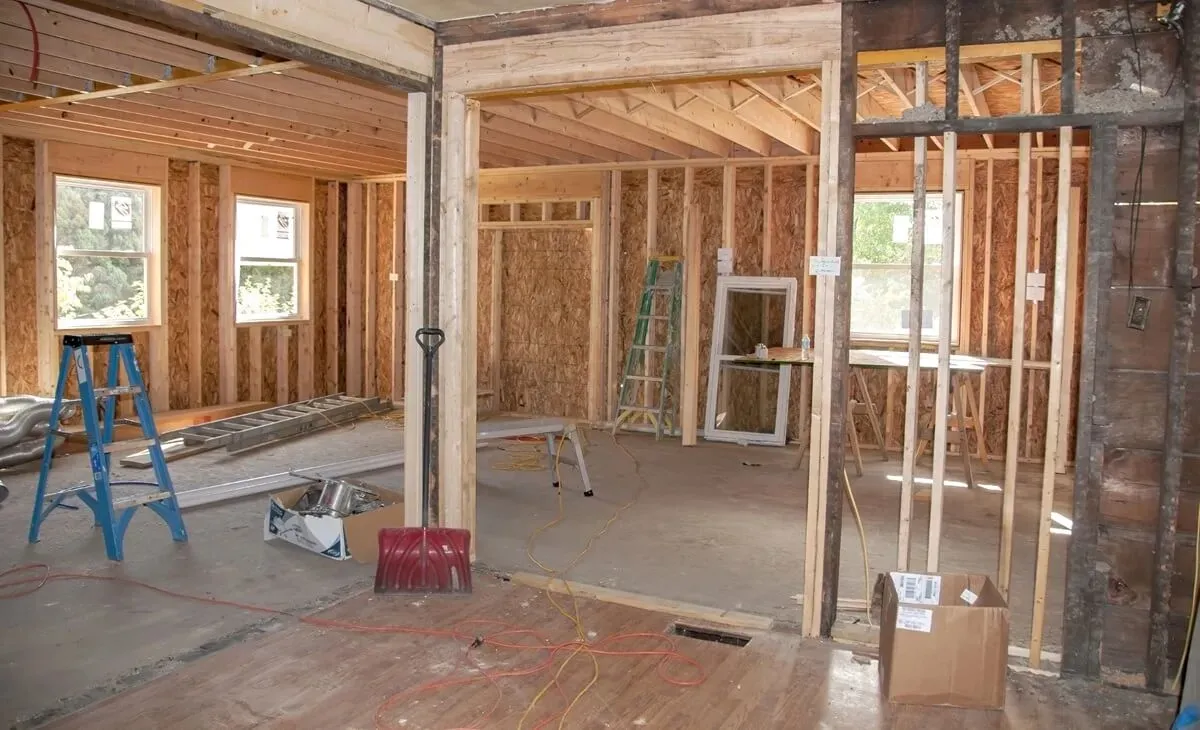
Two phases of one job
Every loss has a mitigation phase and a reconstruction phase. Mitigation is emergency work measured in hours: stop the water, extract it, take out what cannot be saved, place drying equipment and read the moisture every day. Reconstruction is construction work measured in days: close the wall, lay the floor, finish the room.
Ask any company you call whether it does both. Where the two phases sit with two companies, the contractor who closes the wall was not there when it was open, and the moisture readings that decided it could be closed are in somebody else's file.
This business carries both, and the mitigation estimate and the reconstruction estimate are still written separately so the customer can see what each phase cost.
What the rebuild covers
Drywall repair and replacement, flooring repair and replacement, and paint and finishing matched to the room. That is the rebuild scope, and anything a particular job needs beyond it is raised at the estimate before it is quoted.
The work starts when the readings say the cavity is dry, not when the equipment is collected. A wall closed over material that is still holding water seals the moisture in, and the EPA is plain about what follows: clean up the mold without fixing the water problem and it will most likely come back.
Where the job began as a mold remediation rather than a water loss, the sequence is identical. The cavity is opened, the material comes out, the space is dried and verified, and only then does the rebuild begin.
One team, from the emergency call to the finished room
One team means the people closing the wall are the people who opened it. They know what was behind it and what the moisture reading was on the day it was closed.
It also means one set of photographs and one contact number for the whole job. When an adjuster asks in November what the reading was in September, there is one place to look, and no second company to chase.
It also closes the gap that appears when a property is dried by one company and rebuilt by another, with the drying finished and nobody yet holding a date for the rebuild.
How the rebuild is documented for the carrier
The mitigation is documented to the standard a carrier expects: category and class, photographs, moisture readings at each monitoring point on each day the project is active, and a photograph that catches the meter reading and the affected material in the same frame. The S500 standard is where that expectation comes from.
The reconstruction is estimated and documented on the same job, so you have one complete file to give your insurer. What the customer sees is one set of paperwork covering the whole loss, with no second file to reconcile.
What this business does not do is file, adjust or negotiate the claim. That is regulated work, whoever offers to take it on. Documentation is the limit, and a complete file is what moves a claim along.
What is decided at the estimate
The reconstruction estimate names the scope, the materials, the sequence and which parts of the work are performed by this team. Anything brought in is identified there, so a subcontracted trade appears on the estimate before it appears at the property.
It is written before work begins and it carries no hidden fees. There is no price list for a rebuild, because it is priced from a scope and not from a room size.
Where the mitigation is still running, the reconstruction estimate waits for the final readings. Pricing a rebuild while the cavity is still wet produces a number that has to be rewritten, and the rewrite is what customers experience as a change order.
Matching what was there
Paint and finishing are matched to the room as closely as the materials allow. Some things cannot be matched exactly: a discontinued floor, a tile from a lot that no longer exists, a paint that has aged on a wall for a decade next to a fresh patch of the same color.
Where that is the case, it is said at the estimate rather than discovered at handover, along with the options: blend into a corner, take the finish to a natural break, or replace a larger area so the difference has nowhere to show.
The choice belongs to the customer, and it usually turns on what the insurance scope covers rather than on the finishing work itself. It is settled at the estimate, where each option is written down before anything is ordered.
Where restoration stops and water damage starts
The boundary is the dry standard. Everything up to the day the readings hold is mitigation and belongs to the water damage or mold scope. Everything after it is reconstruction and belongs here.
That line matters for the claim as much as for the customer, because carriers read the two phases differently and price them separately. A scope that blurs them is a scope that gets questioned.
It also decides who to call first. A property with standing water needs the emergency number and the mitigation, not a rebuild quote, and asking for the second before the first is how a small loss becomes a large one.
Commercial and larger properties
The published scope is residential work, performed at the property across the six counties. There is no storefront and no drop off point, and every job is done where the loss happened.
For an office, a managed building or a multi unit, ask when you call. The answer depends on the size of the loss and on the building, and it is confirmed with you before anything is quoted.