
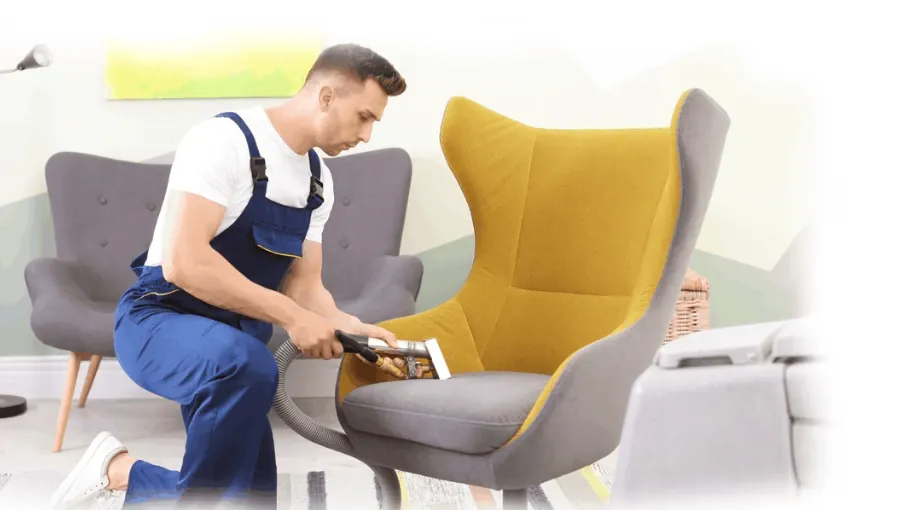
The tag decides the method
The manufacturer code is read before anything else happens, and where the tag is missing the fiber is tested on a hidden panel. Velvet, linen and silk blends each take a different tool, dwell time and amount of moisture. The damage from getting that wrong is permanent: browning on a natural fiber that was wetted too far, a watermark where a wet edge dried faster than the middle, crushed pile where a velvet was worked the wrong way.
Why the method is kept low in moisture
Foam and padding hold water, and a cushion core keeps it well past the point where the fabric on top feels dry. The method is kept low in moisture and the extraction pass is worked more slowly instead of wetter. Airflow goes across the piece afterwards and the cushions are stood on edge, so both faces dry at the same rate.
What is in a sofa
Dust mite allergen concentrates in a sofa, because that is where people spend hours in direct contact. Mites do well between about seventy and eighty degrees Fahrenheit at a relative humidity above fifty percent, which is an unconditioned North Jersey bedroom in July. The allergen sits in the fecal particulate, which becomes airborne when somebody sits down, and the cushion core is a reservoir that surface vacuuming barely touches.
Sunscreen, body oils and the stain that appears in September
Most sunscreens carry avobenzone or mineral oxides suspended in oil. The oil migrates into the fiber and then oxidizes, so an invisible spot in July turns yellow brown by September. Treating it early with the correct solvent based pre spray is the difference between removal and a permanent mark. Body oils on arms and headrests behave the same way.
Blotting a spill so it can still be removed
Blot immediately and press instead of rubbing. Rubbing drives the spill down into the fill, and a spill that has reached the foam can wick back up to the face fabric as the piece dries. Use a clean white towel, because a colored cloth can transfer its own dye into a damp fabric.
Protector, and what it does not do
Fabric protector does not make a sofa spill proof. It lowers the surface energy of the fiber so a liquid beads and sits on top long enough for a blot to lift it, and it reduces the way dry soil clings. It only works on clean fiber: applying protector over soil locks the soil in and wastes the product, so the order is clean, dry, apply, then cure. It wears off in the seats and arms that get used, so reapplication belongs to each professional visit.
Furniture after a water loss
Get wet furniture up off wet flooring straight away, onto blocks or foil tabs, or the wood legs will stain the floor and the floor will keep the piece wet. A solid hardwood frame that met clean water is a strong candidate for restoration. Particleboard and engineered frames that absorbed water lose structural integrity. Foam cores can often be flushed and dried when the water was clean, while anything that met storm water or sewage goes.
Watermarks, odor and antique pieces
A watermark ring along the wick line is cleaned out by taking the whole panel, because a spot clean on a wet edge simply moves the line. Odor is neutralized at the source. Antique and high value pieces are inspected before any water is introduced, because some historic finishes, glues and dyes are not water safe.
Between professional cleanings
Vacuum the cushions weekly with an upholstery tool, rotate and flip them so wear stays even, and hold the humidity in the room between forty five and fifty percent, which suppresses mite populations. Households with pets or allergy sufferers generally do better on two professional cleanings a year than on one.
What the visit includes
Sofas, sectionals, armchairs, dining chairs and ottomans are cleaned at your home or business across the six counties, by appointment, and the work carries a 100 percent satisfaction guarantee.