
Ducts after a water loss
A heating and cooling system running during a water loss does two things at once. It moves humid air from the wet rooms to the dry ones, and it deposits whatever that air is carrying wherever the air slows down, which is usually the return and the coil.
So the duct question is asked as part of the drying, not months later. Where the system ran while the property was wet, the inspection says whether the ducts are part of the job, and the cleaning is scheduled while the space is still open.
Where the loss was category three water, sewage or ground water, the system is treated with the same care as any other porous or hard to clean part of the building, and what it did or did not run through is written into the scope.
Ducts after a mold remediation
The S520 standard covers heating and cooling system remediation as its own part of the work, next to structural and contents remediation, because the system is the one thing in the building that connects the affected room to every other room.
It matters most when growth is found on or near the coil or in the return, when the system ran while growth was active, or when a musty smell arrives at a register rather than at a wall. All three point at the system, not the room.
Cleaning the ducts does not replace fixing the water. It is the step that stops a completed remediation being undone by the first hour the blower runs.
Cleaning to the NADCA standard
NADCA is the National Air Duct Cleaners Association, and its standard is the one duct cleaning is measured against. The work here follows the NADCA standard.
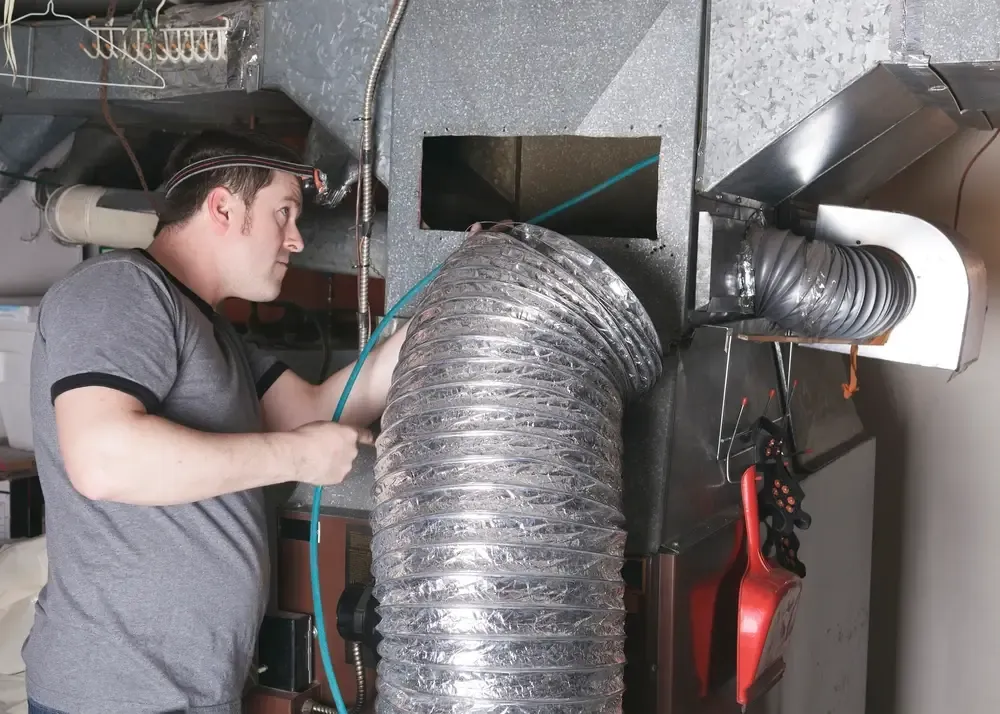
The visit covers whole system cleaning, a sanitizing treatment where the scope calls for it, and an inspection before and after the work. The EPA describes a duct cleaning as covering the supply and return ducts, the registers and grilles, the heat exchanger and the heating and cooling coil, and whole system here means that list.
That is a claim about method. This business does not claim NADCA membership.
What is checked before and after
The system is inspected before the work so the scope is set by what is in it, and inspected again afterwards so there is something to compare. A before and after inspection is the only part of duct cleaning a customer can see for themselves, which is why it is not optional here.
Where a water loss or a remediation is running alongside, the duct inspection is written into the same paperwork as the moisture readings, so one document covers the whole job for the adjuster.
Sanitizing, and what it is for
A sanitizing treatment is offered where the scope calls for one, using EPA registered products that are safe around pets and children. It follows the cleaning rather than replacing it, because a product applied over debris is treating the debris.
There is no fogging in place of removal and no ozone in an occupied home. A smell that survives a cleaned system is telling you something is still there, and chasing it with a fragrance only removes the warning.
Dryer vents go to AMG Duct Cleaning
Routine dryer vent cleaning is not a service of this business. It is handled by AMG Duct Cleaning, the same owner's dedicated duct company, which carries its own Google profile and its own reviews. If a dryer vent is what you need, call AMG Duct Cleaning directly; a call here is passed on to them.
When the ducts do not need cleaning
The EPA does not recommend cleaning air ducts on a routine schedule and puts the decision on an as needed basis instead. A fixed interval answers no question about your system, and dust sitting in a duct that is not moving anywhere is not a reason to open the system up.
The cases that justify it are specific: the system ran through a water loss, growth is on or near the coil or in the return, a renovation put construction debris into the system, or a smell arrives at the registers. Outside that list, the answer on the phone is usually that the system does not need it.
That position turns down some work, and it is the position the EPA takes.
What the estimate covers
There is a written estimate before the work begins and no hidden fees. What moves the number is the size of the system, the number of runs, whether the coil is included, and whether the work is being scheduled inside a water damage or mold job or on its own.
There is no price list for duct work, because the size of the system and the reason for the visit change the work more than the square footage of the house does. Where the cleaning belongs to an insured loss, it is documented with the rest of the job, so you have a complete file to give your insurer.