What a deep clean removes
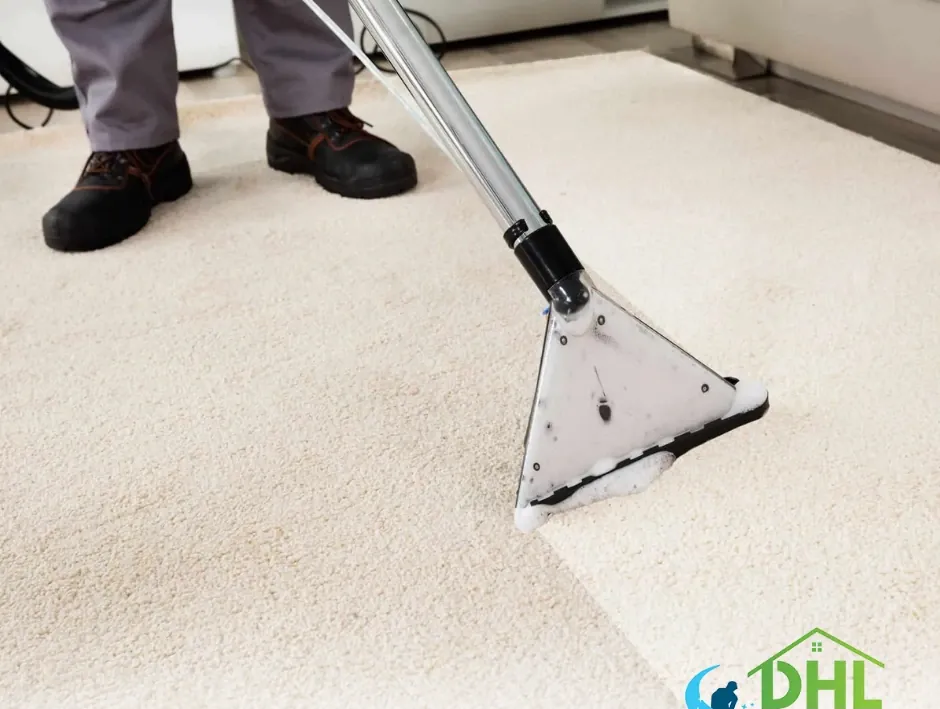
Carpet works like a filter, holding particulate out of the air you breathe until something disturbs it. Vacuuming lifts the surface debris and the loose grit at the top of the pile. Pollen tracked in on shoes and paws, dust mite allergen and skin cells settle below the reach of a vacuum head, and hot water and extraction are what bring those back out.
Recovery power, and drying it properly
Hot water extraction pulls the large majority of the solution straight back out under strong vacuum, which is what a rental machine lacks. Water that stays in the backing for more than about twenty four hours starts to smell. After the visit, run the air conditioning and keep the windows shut: air conditioning takes moisture out of the room and open windows in July put it back. Put air movers or box fans at floor level for four to six hours, and stay off the carpet in street shoes until it is dry to the touch.
Why the last pass is a rinse
The last pass is a rinse. Detergent residue left in the pile attracts soil, so a carpet cleaned with a heavy shampoo and no rinse resoils faster than one cleaned with less product and rinsed properly. Residue can also irritate a sensitive occupant, so ask for a rinse focused finish on any home with allergies in it.
Wool carpet and synthetic carpet
Wool absorbs and releases moisture from the air, so it holds more water than a synthetic pile and is cleaned with less of it and dried under airflow. Its natural dyes can move while it is saturated, so color is tested before the wash is chosen. A synthetic pile is not hygroscopic, so it takes the full hot water extraction pass and dries in the two hours above.
What will not come out, said before the work starts
A mark that has changed the color of the fiber is permanent. Bleach contact, sun fade along a window line and dye loss from a household spot cleaner all remove color, and no cleaning process puts color back. Wicking is the other limit: a spill that soaked through to the backing can rise again as the carpet dries, so a spot that soaked through is not declared finished on the day. Both are named in the written estimate.
When carpet cleaning is the wrong job
Carpet that got wet from a leak or a flood is a drying job first, because the pad and the subfloor hold the water and a cleaning pass over the top leaves it there. The category of the water decides what can stay, and that call is made on site by the technicians who do the drying.
After a carpet has been floated and dried
Restorative cleaning after a water loss runs in a set order: extraction with a weighted wand, pad replacement where the category calls for it, floating the carpet on air movers, an antimicrobial application to the subfloor, then a full hot water extraction once the assembly reads dry on a meter. Expect a re stretch afterwards. Rippling that never settles means the backing has separated from the fiber, and a delaminated carpet is replaced.
Pet accidents and the odor that comes back
Flag pet accidents when you book, so they are treated with an enzyme and so the technician can check how far the urine traveled. Urine that has soaked through changes the color of some fibers permanently.
What to do between visits
Walk off mats at every entry, a no shoes rule in carpeted rooms and HEPA vacuuming twice a week in the traffic lanes remove most of what would otherwise settle into the base of the pile. Blot a spill at once with a clean white towel and press instead of rubbing, which drives the spill into the backing.
What the visit includes
The work is backed by a 100 percent satisfaction guarantee, and every job is done at your home or business across the six counties, because there is no shop to bring anything to.